City Wandering When I Want to Slow Down
Zebra Fires >> Traveling>> City Wandering When I Want to Slow Down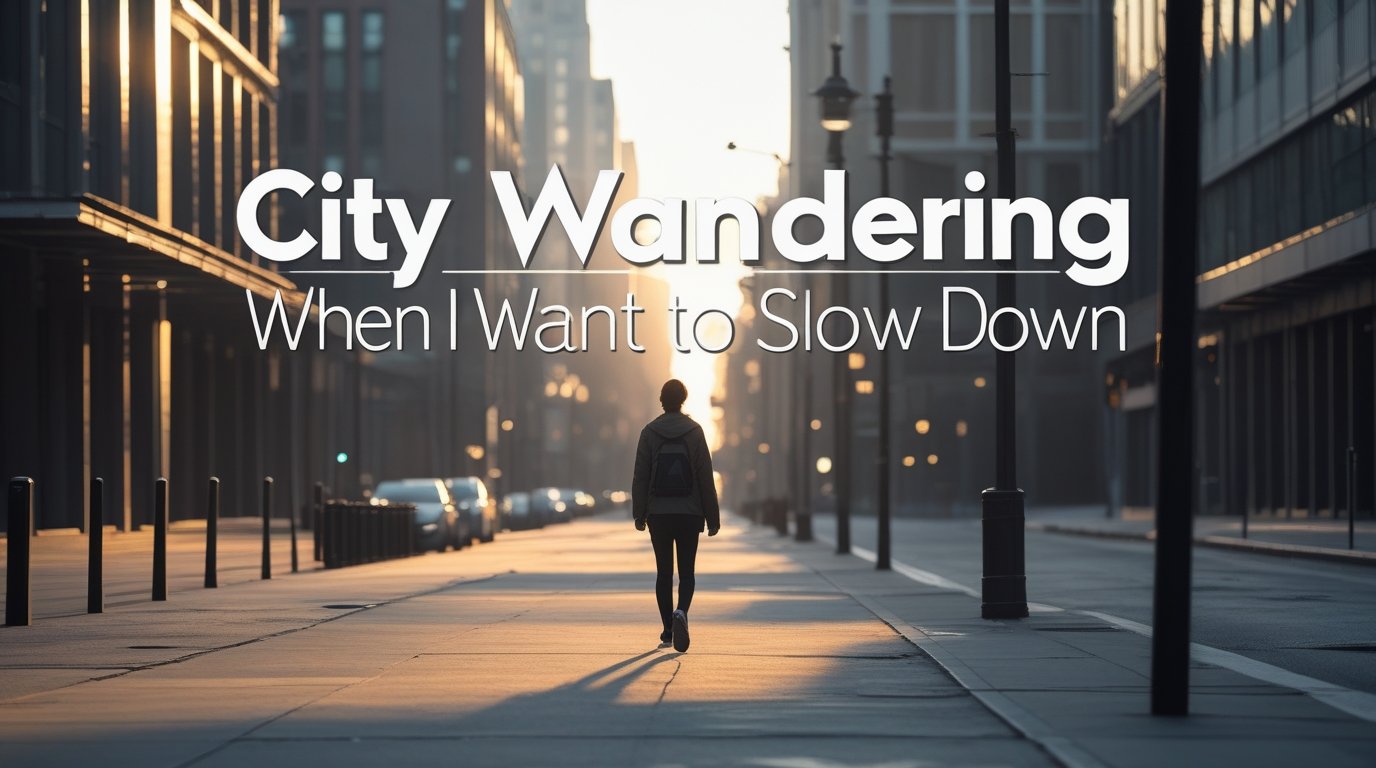
City Wandering When I Want to Slow Down
There’s a specific, frantic energy to modern travel that feels like trying to drink from a firehose. I’d return from a city “break” more exhausted than when I left, my phone bulging with photos of things I’d barely seen. I was collecting destinations, not experiencing them. Then I lost my map in Prague. Actually, I threw it in a bin. What followed wasn’t a disaster; it was a revelation. Now, in every city, I have a ritual: the purposeful, aimless, gloriously slow wander. It’s my reset button. It’s how I turn a metropolis from an overwhelming spectacle into a quiet, personal conversation.
The Anatomy of the Unplanned:
This isn’t laziness. It’s deliberate. I don’t just stumble out the door. I set the conditions for getting lost.
First, I leave the guidebook and turn off all navigation on my phone. I might glance at a paper map for one main artery to avoid, but that’s it. Then, I empty my pockets. Just my phone (on airplane mode, camera only), a single credit card, some local cash, and a reusable water bottle. No bag. No plan. No list of “must-see” cafes. I pick a direction, not a destination, often toward water, a visible hill, or simply the side of the street with the most interesting shadow. The only goal is to notice. I become a sensory detective, hunting not for landmarks, but for texture.
Hunting for Ghosts & Echoes:
When you’re not racing to a monument, you start seeing the layers. In Rome, everyone stares at the Colosseum. But in a slow wander through Testaccio, I found the Monte Testaccio, a literal hill made from millions of broken Roman amphorae, the ancient world’s recycling dump. It’s just a quiet, grassy knoll. You’d miss it if you were looking for something grand. I sat there, running my hand over shards of 2000-year-old pottery, feeling a connection to daily Roman life, the olive oil, the wine, the sheer mundanity of empire, that no guidebook tour could provide.
In Istanbul, I wandered away from the Blue Mosque and into the backstreets of Balat. There, I found a cobbled alley where each house was painted a different brilliant hue, cobalt, saffron, deep magenta. A local artist was setting up an easel. We didn’t share a language, but he gestured for me to watch. He was painting not the colorful houses, but the cracked, grey wall opposite them, with a single, faded political poster peeling away. He was documenting the story behind the postcard. My slow pace let me see his city through his eyes, not a tourist’s checklist.
Finding the Sacred in the Mundane:
We’re trained to look up at spires. Wandering teaches you to look down, to look in, to look closely. In Kyoto, while crowds swarmed the Kinkaku-ji (the Golden Pavilion), I spent an hour in a nameless, back-alley shrine no bigger than a bus stop. A single stone fox statue wore a tiny, hand-knitted red scarf. Offerings were a few persimmons and a child’s drawing. It was breathtakingly intimate. This wasn’t a monument to a dynasty; it was a testament to someone’s grandmother, someone’s hope. I felt like an intruder in the best possible way, privileged to witness a private conversation between a neighborhood and the divine.
In Mexico City, in the bustling Roma Norte, I wandered into a tiny papeleria, a shop selling notebooks and pens. The elderly owner had a magnifying glass on a cord around his neck. He was meticulously re-inking a vintage stamp pad. The smell of paper and ink was profound. We smiled. I bought a pencil I didn’t need. That shop, in its defiant, beautiful specialization in an age of digital everything, was a museum of a vanishing world. It was more centering than any cathedral.
Becoming a Temporary Local:
The ultimate joy of the slow wander is finding a rhythm and repeating it. In Lisbon, I found a particular tram line, not the famous #28, but a quieter one that climbed into the Graça neighborhood. For three mornings, I’d buy the same pastel de nata from the same bakery, ride the same tram to the same stop, and sit on the same sun-drenched wall with the same sprawling view. By the third day, the bakery woman nodded with recognition. The tram driver gave a slight smile. I wasn’t a tourist passing through; I was, for a few minutes, part of the neighborhood’s morning pattern. That sense of temporary belonging, of fitting into a city’s daily groove, is the most profound souvenir you can’t buy.
The Permission to Pause:
My wander has one non-negotiable rule: never hesitate to sit. A bench is a command center for observation. In Paris, on a bench in the Place des Vosges, I watched an old man meticulously feed bits of baguette to sparrows, one at a time, for forty minutes. In Vancouver, on a seawall bench, I watched a sea otter crack open a clam on its chest, completely indifferent to the joggers and bikes. In Marrakech, inside a quiet riad, I sat by a fountain and just listened to the water for so long that the geometric patterns in the tile began to feel like a language. The bench grants you the right to be still, to let the city move around you. It’s in these pauses that the city stops being a slideshow and becomes an ecosystem you’re momentarily part of.
The Alchemy of Getting Lost (And Found):
Of course, you will get lost. This is the point. In Naples, my aimless wandering led me into a labyrinth of Spanish Quarter alleyways so narrow I could touch both walls. I was gloriously, completely turned around. The smell of simmering ragù was overwhelming. A nonna shouted from a third-floor balcony, not in anger, but in laughter at my confused face. She pointed me toward a staircase that opened onto a sudden, breathtaking vista of the bay. The reward for being lost was a view no scenic overlook could match, earned entirely by surrender. Getting purposefully lost is how you discover that every city has a secret, beating heart beyond its tourist arteries. You find not just new streets, but a new version of yourself that is more patient, more curious, and more open to surprise.
The Slower Return:
I return from these wanderings with almost nothing tangible. No tickets, no trinkets. My feet ache pleasantly. My camera might have five photos: a pattern of manhole covers, a cat on a windowsill, a shadow on a wall. But my mind is full. The city is no longer a list of conquered sites; it’s a collection of felt moments, small interactions, and discovered textures. It has gone from a noun to a verb. To wander slowly is to choose depth over breadth, connection over consumption. It’s the art of finding the infinite in the overlooked, and it’s the only way I truly learn a city’s name.
FAQs:
1. Won’t I miss the important sights?
You’ll experience the more important sight: the real life happening between and around them.
2. Is it safe to wander without a map?
In well-trafficked urban areas, yes; stay aware, not oblivious, and use a paper map as a discreet safety net.
3. What if I have limited time in a city?
A single, focused two-hour wander will teach you more about its soul than a frantic, checklist-filled day.
4. How do you choose where to start?
Start anywhere unremarkable—your hotel neighborhood is often the most authentic place to begin.
5. Don’t you get bored?
Boredom is the gateway; it forces you to notice the subtle details you’d otherwise sprint past.
6. What’s the one thing you always do?
Find a bench, sit, and do absolutely nothing but watch for at least twenty minutes.